


Choosing Marble or Granite in Toronto for Stone Cladding? Use These 5 Tips
- By Manny Singh
- |
- Oct. 21. 2026
A stone feature wall can completely change the look of a room, but picking the wrong stone can cause problems that are hard to fix after installation. Stone cladding involves fixing thin slices of natural stone onto a wall surface, and with marble and granite being two of the most popular choices, the choice between them matters more than most people realize.
On the one hand, marble may look beautiful in a showroom but needs more care than you might expect. On the other hand, granite is tough and durable, but it is heavy and takes work to install.
If you are looking at stone cladding in Toronto stores, choosing between marble and granite is about more than just colour or looks. Each stone behaves differently, needs different care, and works better in some spaces than others.
You need to take these factors into consideration in Toronto, which has a mix of modern and traditional homes, plus cold winters and humid summers. Let’s look at these factors before choosing the ideal stone cladding for your Toronto home.
How Do Marble and Granite Differ?
Marble and granite are both natural stones, but they are not the same. Marble is popular for walls where looks matter most, whereas granite is harder and more resistant to scratches and daily wear.
Where does each one work best?
Marble wall cladding works well in indoor spaces where appearance is the main goal, such as:
- Living room feature walls.
- Decorative bedroom walls.
- Bathroom vanity walls.
- Interior accents and architectural details.
Granite works well in areas that need more durability. Its natural patterns also look great in both modern and traditional interiors.
Neither stone is better than the other in every situation. A decorative wall in a quiet bedroom has very different needs from a high-traffic commercial entrance or an outdoor wall. Before you decide, consider how the wall will be used and what conditions the stone will face.
Marble vs. Granite: Which One Should You Choose?
Here’s a quick look at the differences between marble and granite.
| Consideration | Marble | Granite |
| 1. Appearance | Flowing veins and elegant patterns | Speckled, granular, or bold mineral patterns |
| 2. Surface hardness | Generally softer | Generally harder |
| 3. Acid sensitivity | More susceptible to etching | Usually more resistant |
| 4. Maintenance | Needs closer attention | Generally straightforward, depending on the variety |
| 5. Common interior uses | Decorative walls, bathroom features, statement interiors | Accent walls, entrances, kitchens, commercial interiors |
| 6. Exterior suitability | Depends on the stone variety and exposure | Often suitable with proper material testing and installation |
What to Consider Before Choosing Stone Cladding in Toronto
Choosing the right stone for your wall comes down to more than picking a colour or pattern you like. It involves the location, the weight it puts on your wall, the maintenance it needs, and the total cost—all of which affect how well it holds up over time. Therefore, working through these five factors before you commit to a material can save you from costly surprises down the road.
1. Consider the Location and Conditions
Where the stone is going makes a big difference in selecting granite or marble. An indoor living room wall in a temperature-controlled home is very different from an exterior wall that faces Toronto’s freezing winters, hot summers, and constant temperature changes.
Indoor and outdoor cladding have different needs
Granite wall cladding can work for certain outdoor projects in Toronto because many types of granite absorb very little water and hold up well in changing weather. But not every granite is right for outdoor use. You need to check its freeze-thaw resistance, the right thickness, how it will be anchored, and which variety is actually suitable.
Some types of marble can also work outdoors, depending on the stone’s physical properties and how much exposure it will get. However, certain varieties may show surface damage or colour changes over time when left in outdoor conditions.
For bathrooms and any area with moisture, waterproofing and proper wall preparation are essential, irrespective of the stone you pick. A common mistake is thinking that because the stone handles moisture well, the wall itself is waterproof, which it isn’t. The full installation system needs to manage water properly.
2. Think About Weight, Thickness, and Wall Support
Natural stone is heavy and, hence, is one of the most important practical things to think about before installation. Even thin stone panels add real weight to a wall, especially when the installation covers a large area.
Several things affect how much weight the wall will carry:
- Stone density: Different stones and varieties weigh different amounts.
- Panel thickness: Thicker panels weigh more.
- Installation area: More wall coverage means more total weight.
- Attachment method: Adhesive systems and mechanical anchors each have their own requirements.
Why a professional assessment matters
When planning stone cladding in Toronto, have professionals check the wall and installation system before any cutting or fabrication begins. Standard drywall should not be assumed strong enough to hold heavy stone panels. Depending on the project, you may need a stronger substrate, mechanical anchors, or an engineered support system. The right attachment method depends on the panel size, weight, wall type, and conditions.
Large stone panels may also need special handling equipment during installation. This may include vacuum suction lifters to grip and position heavy slabs, and scaffolding or hoisting equipment for tall walls where panels cannot be safely lifted by hand alone.
This matters especially for tall walls, staircase features, fireplace surrounds, and commercial spaces. Proper planning helps prevent installation problems and keeps the stone safely in place over time.
3. Choose the Right Colour, Pattern, and Surface Finish
Stone can completely change how a room feels visually. However, picking a material based only on a small sample can lead to disappointment when the full wall looks very different.
Marble often has flowing veins and natural colour movement across the surface. Depending on the slab, those patterns can be subtle or very bold.
In contrast, granite looks different and tends to have a granular appearance, with natural minerals distributed across the surface. It can range from fine and consistent to dramatic in colour and texture.
Think about how the stone fits your space
For marble wall cladding, many Toronto homeowners choose designs that work with neutral cabinets, warm lighting, wood finishes, and contemporary furniture.
Surface finish also changes the result:
- Polished finishes reflect more light and make colours and veining stand out.
- Honed finishes give a softer, less shiny look.
- Textured finishes can add visual depth where suitable.
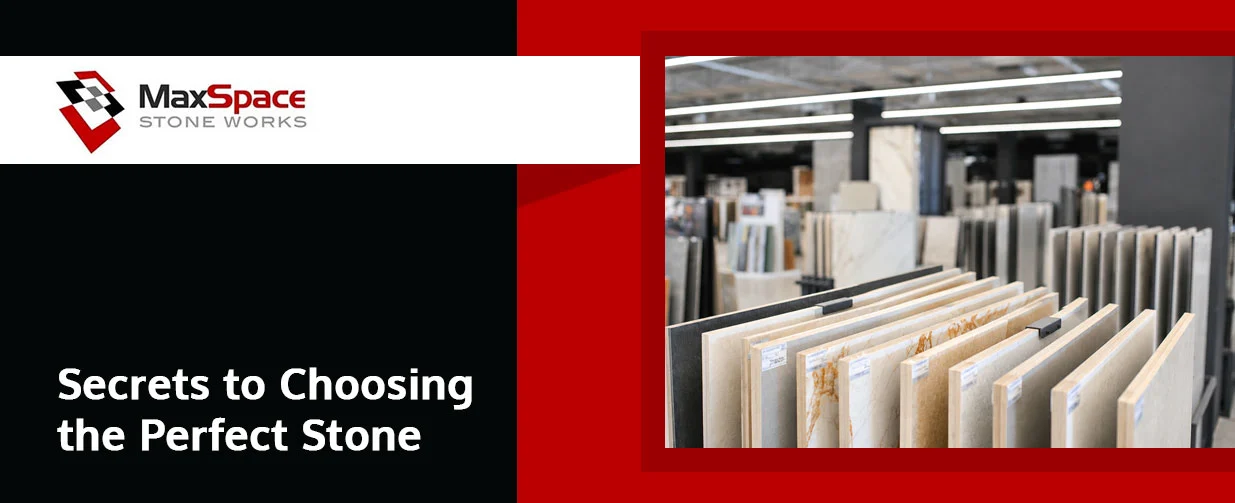
Lighting matters more than most people expect. A polished stone near a large window looks very different under daylight than it does under warm indoor lighting. Partner with a reliable supplier like MaxSpace Stone Works, where you can see the actual slabs under different lighting before you make your choice. This helps in understanding the natural variation that will appear across your finished wall.
4. Understand Maintenance and Long-Term Care
Natural stone is durable, but it is not completely maintenance-free. Marble and granite respond differently to everyday substances, cleaning products, and environmental exposure.
Marble needs more careful handling because it is sensitive to acids such as acetic acid and citric acid, the kind commonly found in everyday household products. Vinegar, lemon-based cleaners, and many common bathroom products can etch the surface, leaving dull spots or marks.
On the other hand, granite is generally more resistant to household acids and to scratching, although its exact performance depends on the specific variety and finish.
A few care habits apply to both stones:
- Dust and clean the surface regularly.
- Wipe up spills quickly, especially on more porous stones.
- Avoid harsh chemical cleaners and rough scrubbing pads..
- Follow the stone-specific advice about sealing
- Keep an eye on moisture around joints and edges.
If you want a low-maintenance option, knowing the difference between marble and granite before you buy can save a lot of frustration.
5. Plan Your Budget and Choose Your Stone in Person
The price of stone cladding is about much more than just the cost of the slab. Two projects using the same stone can end up at very different prices because of wall size, design complexity, finishing needs, and structural requirements.
What affects the total cost?
When comparing options for stone cladding in Toronto, keep these costs in mind:
- Material selection: Different marble and granite varieties have different prices based on their characteristics, availability, and quality.
- Stone thickness and panel size: Larger or thicker panels can affect material use, transportation, fabrication, and installation.
- Cutting and edge finishing: Custom cuts, exposed edges, openings, and detailed finishing add to the fabrication work.
- Pattern alignment: Bookmatched marble or carefully aligned veining requires extra planning and may use more material.
- Wall preparation: Structural changes, waterproofing, substrate work, or special anchoring all affect your budget.
- Installation access: High walls, tight spaces, and difficult access can require extra equipment or labour time.
Rather than comparing slab prices alone, ask for a project-specific estimate that clearly spells out what is included.
What Should You Check Before Finalizing Your Selection?
Natural stone varies from slab to slab. Two pieces of the same stone variety can look noticeably different in veining, colour, and mineral distribution. This makes in-person selection very important, especially for large feature walls where those differences become more obvious.
A showroom visit is the best opportunity to ask practical questions:
- Can the slabs you like cover the planned wall dimensions?
- How will the natural patterns line up between adjoining pieces?
- Which finish is right for the space where the stone will go?
- What substrate and installation method will be needed?
- How will exposed edges, corners, and joints be finished?
At MaxSpace Stone Works, you can choose from more than a thousand stone slabs in our 28,000 sq. ft. North York showroom. Seeing full slabs in person gives you a much clearer picture than relying on catalogues or small samples. MaxSpace also handles everything from material selection to professional installation for both residential and commercial projects. Our experienced team can spot potential issues before the material is cut, which avoids costly complications during installation.
Choosing between marble and granite for stone cladding depends on more than looks for your Toronto space. Where the stone will be installed, how much weight the wall can carry, how much maintenance it needs, and what the full project will cost all affect how well it holds up over time. Neither material is the right answer for every situation, so thinking through these factors early helps you make a smart decision.
Frequently Asked Questions
- Is marble or granite better for a living room feature wall?
Both can work well. Marble is often chosen for its distinctive veining and elegant look. Granite offers varied mineral patterns and is generally harder. Because living room walls don’t face much physical wear, the choice usually comes down to design preferences, lighting, and how much maintenance you want to do.
- Can natural stone cladding be installed over existing drywall?
Not always. Heavy natural stone needs proper structural support and the right attachment system. You should not assume standard drywall is strong enough without having it assessed first. Panel size, weight, wall construction, and installation method all determine whether additional preparation or reinforcement is needed.
- Does marble or granite wall cladding need to be sealed?
It depends on the stone. Some varieties benefit from sealing, while others may not need it. The decision is based on how porous the stone is, its finish, how much moisture it will be exposed to, and where it is installed. A sealer can improve stain resistance, but it does not make the surface waterproof and will not prevent marble from etching.
- Can marble and granite be used for bathroom wall cladding?
Yes, certain varieties of both can be used in bathrooms. However, shower walls and wet areas need proper waterproofing, the right substrate preparation, and compatible installation materials. When choosing stone for a bathroom, consider porosity, cleaning requirements, and ongoing moisture exposure.
- How long does marble or granite wall cladding installation take?
It depends on wall size, slab availability, fabrication needs, substrate preparation, and design complexity. Smaller interior projects are generally faster than large custom installations. Ask for a project-specific timeline once measurements and material selection are finalized.