


How to Maintain Your Toronto Granite Bathroom Countertop
- By Manny Singh
- |
- Jan. 23. 2026
Granite is a durable and reliable bathroom countertop material. This natural stone can withstand temperature changes, deal with scratches, and resist water absorption better than many other options. It does not degrade after being exposed to steam and humidity. All these factors make granite a perfect choice for bathroom countertops in the Toronto area.
Granite is, however, porous, meaning it can absorb liquids. Granite bathroom countertops come into frequent contact with soaps, body wash, water, and other cleaning materials. That’s why following a proper maintenance routine is essential if you want your granite countertop to function for a long time.
Here, we explain how to maintain your granite bathroom countertop. We cover daily cleaning practices, safe products, sealing, moisture control, and common mistakes to avoid.
Let’s get started.
How to Clean Granite Bathroom Countertops
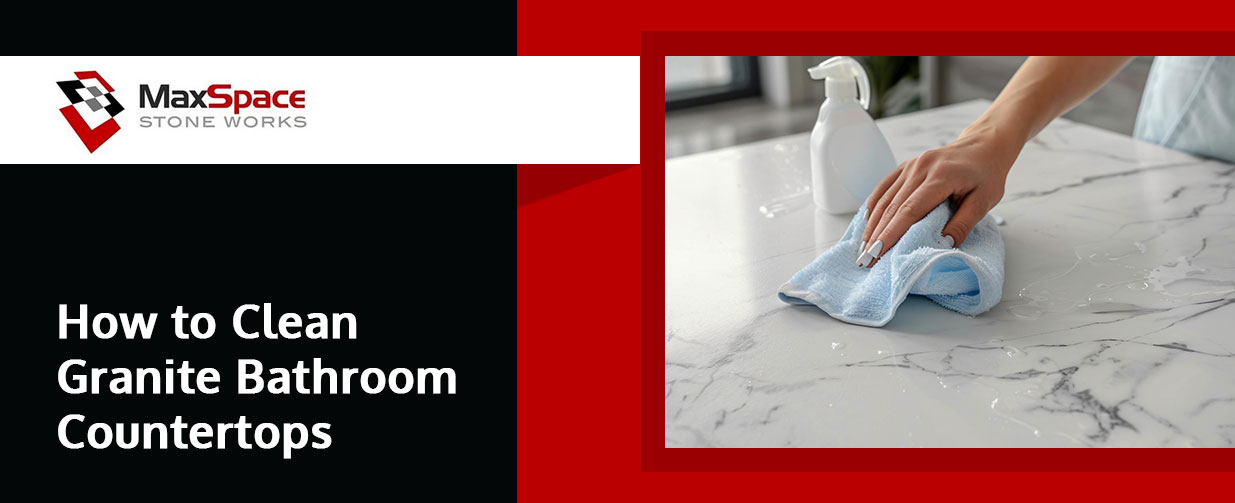
Granite can provide your bathroom with a spa-like appearance. But to enjoy its advantages, you need to keep the countertop in good condition. For that, regular cleaning is mandatory.
Items Necessary for Daily Cleaning
Using the wrong products can damage your granite countertop. Here is a list of what you will require:
- Cleaning products that are gentle, such as mild dish soap and a pH-neutral granite cleaner
- Soft sponge and a microfiber cloth for wiping
- Gloves (for sealing)
- Clean water for wiping the counter thoroughly
- A good granite sealer
What Not to Clean Granite Countertops With
Some items you should avoid while dealing with granite countertops include:
- Abrasive cleaners
- Acidic products like vinegar and lemon juice
- Ammonia-based cleaners
- Bathroom cleaners that decolour the countertop
Daily Cleaning Steps for Granite Bathroom Countertops
Here is a step-by-step process of how to clean your granite countertop:
- Clear the Area: Before you begin cleaning, make sure the area is completely clear. Remove soap dispensers, toothbrush holders, trays, and anything else on the countertop.
- Make the Cleaning Solution: Mix warm water and mild dish soap. Soak a sponge in the solution.
- Wipe After Applying the Solution: Sponge the countertop. If you are targeting a stubborn stain, leave the cleaning solution on for a few more minutes, then wipe it.
- Rinse Well: Now, dampen another cloth with clean water and wipe the area. This is done to ensure no soap residue remains on the countertop.
- Dry Completely: Wipe the surface with a clean, dry cloth. Make sure no water spots remain and that the entire area is fully dry. Only after this step can you get the polished look of granite countertops.
Weekly Cleaning Routine of Granite Bathroom Countertops
With weekly routines, you can target soap scum, hair spray residue, and other areas that daily cleaning might miss. Here’s the process:
- Spray a pH-neutral, granite-friendly cleaner evenly across the countertop. Make sure you leave no edges untouched.
- Use a soft toothbrush or cloth to clean around the sink and corners. Do not miss the backsplash area. This is the most common area for soap scum and toothpaste residue.
- Wash everything with water. Then let the area dry. If needed, you can use a soft dry cloth for this.
Sealing Granite Bathroom Countertops
Granite is a porous stone, so it easily absorbs liquids and stains. Sealing means providing your countertop with a protective barrier that fills its natural pores and prevents liquids from soaking in. Sealing is not a complex process, but you need to follow certain steps to do it right:
- Your countertop needs to be completely dry before applying the sealer. After you clean the surface, leave it to air dry. If any dirt, grease, or moisture remains on the surface after sealing, the results will not be flawless. If needed, leave the countertop to dry overnight.
- Read the manufacturer’s instructions. Take a soft, clean cloth and apply a thin, even coat of granite sealer evenly across the countertop. Try not to overdo it.
- Let the sealer be absorbed into the stone. This generally takes around five to fifteen minutes.
- Make sure you wipe off any excess sealer with a dry cloth. If you let the excess sealer dry on the counter, it will leave a hazy residue that will be difficult to remove later.
- Manufacturers sometimes suggest applying a second coat of sealer. This is necessary if the granite is of a more porous variety. Wait for at least 30 to 60 minutes before applying the second coat. Repeat the same process of applying the sealer.
- After you are done applying the final coat, give it time to cure completely. It will take around 24 to 72 hours for the sealing to bond with the stone. During this time, avoid using the countertop altogether and do not place anything heavy on it.
Sealing is normally done during the countertop installation process, but may not be included in the installation cost. Discuss that beforehand with the installers.
However, sealing your granite countertop once will not last a lifetime. You need to make sure the surface area receives resealing when it is needed. To determine this, sprinkle some water on the countertop. If the water beads up, your sealing is intact. However, if it is absorbed within 30 minutes, you need to schedule another sealing.
Avoid Excessive Moisture on the Countertop
Granite can easily absorb moisture, and bathrooms are regularly exposed to spilled water and humidity. Moisture will affect the sealer, which will impact the longevity of your bathroom countertop, so take these precautions:
- Always keep a soft microfiber cloth available. Whenever soap or any other liquid is spilled on your granite countertop, wipe it up immediately.
- Put coasters under glasses and bottles to protect the countertop and trays under soap dispensers and other toiletries. This will protect the surface from any leaks.
- Make use of the bathroom exhaust fan before, during, and after showers. This will stop moisture from building up over the surface.
Common Mistakes People Make with Granite Countertops
Avoid these common mistakes made with granite countertops:
- Using cleaners with harsh chemicals can break down the sealant. Always check the ingredients in your cleaners before using them.
- Not wiping up spills immediately is a mistake. Remember, the longer you let a spill stay on the countertop, the more likely it is to penetrate the stone.
- Not scheduling sealing on time can lead to stains, dullness, and damage from moisture. Fixing these issues can cost you a lot in the long run.
- Leaving the excess sealer on the countertop makes the area hazy and difficult to clean later.
Maintaining the granite countertop in your Toronto-area home’s bathroom is not hard. It just requires daily cleaning and some precautions, like choosing a good sealant and applying it regularly. MaxSpace Stone Works produces high-quality granite countertops that we install professionally. Have questions regarding the maintenance or selection of your granite bathroom countertops? Contact us today.